
Introduction to Vintage Lock Restoration
Many property owners in the Bridgewater area discover vintage locks during renovation projects or when purchasing older homes near 410 Commons Way and throughout Somerset County. These discoveries present an important choice: replace the antique hardware with modern alternatives or invest in professional restoration. Whilst contemporary locks certainly offer enhanced security features, vintage lock restoration allows you to maintain architectural authenticity whilst ensuring the mechanism functions smoothly. This approach proves particularly valuable for listed buildings, homes in historic districts, museums, and collectors who appreciate the aesthetic and historical significance of original hardware.
Our Vintage Lock Restoration Process
Our comprehensive restoration process begins with a thorough assessment and documentation phase. When you bring a vintage lock to our facility near 410 Commons Way in Bridgewater, our specialists carefully examine every component to determine the lock's approximate age, manufacturer, and original finish. We photograph the piece from multiple angles, document any maker's marks or patent dates, and create detailed notes about its condition. This initial evaluation allows us to provide you with historical context about your lock whilst identifying any missing components, structural damage, or corrosion that requires attention. We also research the lock's provenance when possible, as understanding its original application—whether residential, commercial, or specialty use—informs our restoration approach.
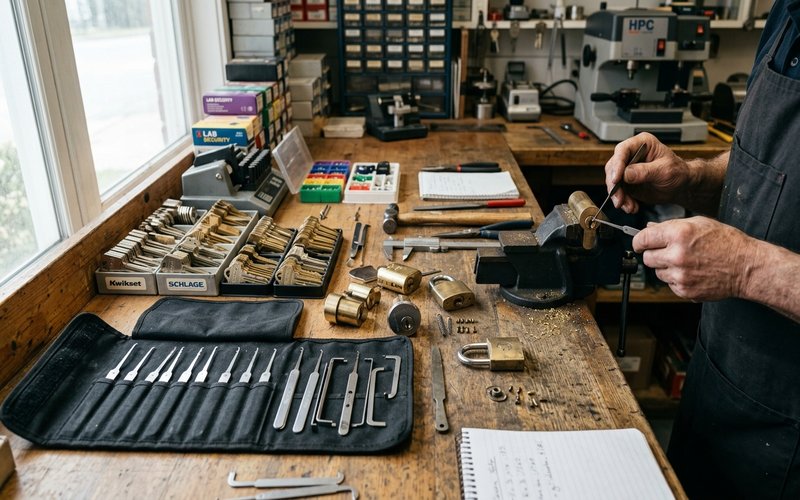
The disassembly stage requires exceptional care and patience. Unlike modern locks manufactured with standardised components, vintage locks often feature hand-fitted parts that were custom-filed during original assembly. We meticulously document the position and orientation of each component as we disassemble the mechanism, creating diagrams and taking reference photographs that guide reassembly. Springs that have lost their temper, pins worn from decades of use, and internal plates corroded by moisture exposure are all carefully removed and catalogued. This systematic approach ensures nothing is lost or damaged during the restoration process, even when working with mechanisms that may contain dozens of small, intricate parts.
Once disassembled, each component undergoes cleaning and corrosion removal. This stage demands considerable expertise, as aggressive cleaning methods can irreversibly damage original finishes, maker's marks, and patina that collectors value. We employ gentle chemical solutions, ultrasonic cleaning techniques, and careful hand polishing to remove accumulated grime, rust, and corrosion whilst preserving the lock's historical integrity. For locks with decorative brass, bronze, or ornamental iron components, we take particular care to maintain any surviving original finish. The goal is to reveal the lock's inherent beauty without making it appear artificially new—a balance that distinguishes professional restoration from amateur refinishing.
The repair and fabrication phase showcases our technical capabilities. Worn tumblers, broken springs, damaged lever mechanisms, and missing screws all require attention. When possible, we repair original components through careful metalwork, welding, or reinforcement. However, when components are beyond salvage, we fabricate replacements using period-appropriate materials and techniques. This might involve machining a new tumbler from brass stock, hand-filing a lever to match surviving pieces, or creating a replacement spring with the correct temper and dimensions. For particularly rare locks, we occasionally collaborate with specialist metallurgists who can analyse original alloys and recreate historically accurate replacement components.
Reassembly and calibration represents the culmination of our restoration efforts. We carefully reconstruct the mechanism, ensuring each component seats properly and moves freely without binding. Vintage locks often required hand-fitting during original manufacture, and decades of wear may have altered clearances between moving parts. Our technicians make subtle adjustments to restore smooth operation whilst maintaining the lock's original mechanical characteristics. We test the mechanism repeatedly, verifying that keys turn smoothly, bolts throw completely, and all security features function as the original manufacturer intended. This calibration process cannot be rushed—it requires the tactile sensitivity that comes only from extensive experience working with antique mechanisms.
Finally, we address finishing and protection. Depending on your preferences and the lock's intended use, we may apply period-appropriate finishes that protect the restored mechanism whilst enhancing its appearance. Options include traditional finishes like japanning for iron components, lacquering for brass elements, or hand-rubbed oil treatments for decorative pieces. We also provide guidance on appropriate key duplication when original keys are worn or missing, sometimes creating reproduction keys using historical blank profiles. Each restored lock leaves our workshop with detailed care instructions that help you maintain its condition for future generations.
Types of Vintage Lock Restoration Services We Offer
Mortise Lock Restoration represents one of our most frequently requested services. These substantial locks, commonly found in doors of homes built between 1850 and 1950, feature intricate internal mechanisms housed within rectangular cases mortised into door edges. We restore Victorian-era mortise locks with their characteristic ornate faceplates, Craftsman-period locks with simpler aesthetic lines, and early 20th-century mechanisms from manufacturers like Russell & Erwin, Sargent, and Yale. Our restoration addresses common issues including worn tumblers, broken springs, corroded internal plates, and damaged faceplates, returning these substantial mechanisms to smooth operation.
Rim Lock Conservation focuses on surface-mounted locks that predate mortise lock popularity. These locks, often featuring decorative cast iron or brass cases, were standard equipment in 18th and early 19th-century buildings. Rim locks present unique restoration challenges due to their exposed mounting position, which often leads to paint accumulation, weather damage, and corrosion. We carefully remove inappropriate paint layers, restore decorative casting details obscured by decades of maintenance, and ensure the internal mechanisms operate reliably. Many rim locks feature beautiful keeper plates and ornamental details that become stunning focal points once properly restored.
Padlock Restoration services encompass the remarkable variety of antique padlocks that collectors discover in estate sales, inherit from family members, or excavate during property renovations. From heavy brass railroad locks bearing company logos to delicate Victorian trick padlocks with hidden keyways, each padlock restoration requires specialised knowledge. We work with shackle mechanisms that have seized from rust, restore decorative engraving obscured by corrosion, and ensure locking mechanisms engage properly. Collector-grade padlocks often require particularly conservative restoration approaches that preserve original finishes and manufacturer markings that significantly impact historical and monetary value.
Cabinet and Furniture Lock Rehabilitation addresses the smaller, often more delicate locks found in antique furniture, desks, jewellery boxes, and cabinets. These diminutive mechanisms require exceptional precision during restoration due to their small-scale components. We frequently work with warded cabinet locks, simple lever mechanisms, and early pin tumbler designs scaled for furniture applications. Our services include restoring decorative escutcheons, repairing delicate springs, fabricating replacement keys for lost originals, and ensuring smooth operation without damaging surrounding woodwork or finishes.
Safe and Vault Mechanism Restoration represents our most technically demanding work. Antique safes manufactured by companies like Diebold, Mosler, and Herring-Hall-Marvin often feature complex time locks, multi-wheel combination mechanisms, and intricate bolt work that require specialised expertise. We restore these mechanisms to functional condition, addressing issues like worn combination wheels, dried lubricants that prevent smooth operation, and relocking mechanisms that have activated. Safe restoration often involves working within the constraints of irreplaceable original components, as replacement parts for discontinued mechanisms simply don't exist in modern supply channels.
Architectural Hardware Restoration extends beyond locks to encompass related period hardware including hinges, door pulls, knobs, keyhole escutcheons, and strike plates. Maintaining consistent aesthetic across all hardware elements proves essential when restoring historic properties. We restore decorative cast bronze hardware, ornamental iron pieces with original hand-forged details, and Victorian-era brass components with elaborate patterns. This comprehensive approach ensures that restored locks integrate seamlessly with surrounding hardware, maintaining architectural authenticity throughout your property.
Key Duplication and Recreation for vintage locks requires specialised capabilities beyond standard key cutting. Original keys for antique locks often feature unusual profiles, decorative handles, and non-standard dimensions that modern key blanks cannot accommodate. We maintain an extensive inventory of reproduction skeleton key blanks, antique key stock, and historical profiles. For particularly rare locks, we can fabricate keys from solid brass or steel using traditional filing techniques, creating functional duplicates that match the original key's appearance and mechanical characteristics.
Why Choose Somerset County Locksmith Corp for Vintage Lock Restoration
Our specialised expertise in historical mechanisms distinguishes Somerset County Locksmith Corp from general locksmith services. Whilst many locksmiths excel at contemporary security systems, vintage lock restoration requires fundamentally different knowledge and skills. Our team has invested years studying lock patents from different eras, examining museum collections, consulting period manufacturing catalogues, and building hands-on experience with mechanisms that haven't been commercially produced for decades. This depth of knowledge proves invaluable when identifying mysterious locks, sourcing appropriate replacement components, or determining the most conservation-appropriate restoration approaches for historically significant pieces.
We maintain an extensive inventory of vintage components and materials that would be impossible for individual property owners to assemble. Our workshop stocks brass blanks in various alloys, steel stock for fabricating internal components, period-appropriate screws and fasteners, and even salvaged parts from locks too damaged for complete restoration but valuable as donors for repairable pieces. This inventory allows us to complete restorations that would otherwise require months of sourcing obscure components. We've also developed relationships with specialist suppliers who can provide historically accurate materials including spring steel with period-correct temper, authentic finishing chemicals, and reproduction hardware elements for popular lock models.
Our conservation-minded restoration philosophy ensures we never compromise a lock's historical integrity for the sake of convenience. We understand that over-restoration can diminish both the historical significance and collector value of antique locks. Our approach carefully balances functional restoration with preservation of original materials, finishes, and maker's marks. We document our work thoroughly, maintain records of which components were repaired versus replaced, and can provide detailed restoration reports for insurance documentation, historical society submissions, or resale purposes. This professional approach proves particularly important for locks in museum collections, historically designated properties, or pieces with significant collector interest.
Convenient location serving Bridgewater and Somerset County makes our services readily accessible to property owners throughout the region. Our workshop near 410 Commons Way in Bridgewater, NJ 08807 provides a dedicated space for restoration work, equipped with specialised tools and equipment that cannot be transported to job sites. Property owners can visit our facility to discuss restoration projects, examine examples of completed work, and gain insights into the restoration process. For customers with locks still installed in doors or furniture too valuable to remove, we also provide on-site assessment services throughout Somerset County, evaluating vintage hardware in place and developing restoration strategies that minimise disruption to your property.
Our commitment to education and transparency ensures you remain informed throughout the restoration process. We provide detailed explanations of what restoration will entail, offer realistic assessments of achievable outcomes, and present options when multiple approaches might be appropriate. If we discover unexpected complications during disassembly—additional damage not visible during initial examination, for instance—we contact you immediately to discuss how this impacts the restoration plan. We believe informed customers make better decisions about their vintage locks, and we're always happy to share knowledge about your lock's history, manufacturer, and mechanical characteristics.
Common Situations Requiring Vintage Lock Restoration
Historic home renovation projects represent our most common source of restoration work. Property owners purchasing older homes in Bridgewater's established neighbourhoods frequently discover original locks in varying conditions. Sometimes these locks remain functional but aesthetically degraded by layers of paint or surface corrosion. Other times, mechanisms have seized from decades of neglect, keys have been lost, or previous owners have attempted amateur repairs that created additional problems. Homeowners committed to historically appropriate renovations recognise that restored original locks contribute significantly to period authenticity, often making restoration more desirable than replacement with modern reproductions that lack genuine patina and craftsmanship.
Estate inheritance and family heirlooms often bring customers to our workshop with locks possessing deep sentimental value. Perhaps a grandmother's jewellery box with an ornate brass lock no longer opens, or a great-grandfather's toolbox features a padlock bearing a railroad company logo from his employment years. These pieces carry emotional significance that transcends their functional purpose, making professional restoration a meaningful way to honour family history. We approach such projects with particular sensitivity, understanding that we're not merely repairing mechanisms but preserving tangible connections to beloved family members and their stories.
Architectural salvage and antique collection enthusiasts regularly seek our restoration services for locks discovered in salvage yards, estate sales, and online auctions. Collectors building comprehensive assemblages of locks from specific manufacturers or time periods require expert restoration to bring their acquisitions to display-worthy condition. We work with collectors to understand their specific requirements, whether that means conservative restoration that preserves maximum originality for museum-quality pieces or more comprehensive refurbishment for locks intended as decorative elements. Our documentation capabilities also support collectors who maintain detailed records of their assemblages.
Commercial property restoration projects occasionally involve substantial quantities of vintage hardware. When building owners renovate historic commercial properties—former banks, hotels, schools, or municipal buildings—the original hardware often includes high-quality locks worthy of restoration. These projects might involve dozens of mortise locks requiring similar restoration approaches, creating economies of scale whilst ensuring consistent hardware appearance throughout the building. We have experience managing larger restoration projects, coordinating timelines with construction schedules, and maintaining organised tracking systems to ensure each lock returns to its original location.
Museum and institutional conservation work represents our most technically exacting restoration category. Museums acquiring antique locks for collections require conservation-grade restoration performed according to strict professional standards. These projects often involve extensive documentation, reversible restoration techniques that allow future conservators to access original materials, and approaches that maximise preservation of original finishes and components. We welcome collaboration with museum professionals and can adapt our methods to meet institutional conservation standards and documentation requirements.
Insurance restoration following property damage occasionally brings customers to our workshop with vintage locks damaged by fire, flooding, or vandalism. When insurance settlements allow replacement of damaged components, property owners committed to maintaining historical integrity often choose restoration over replacement. We can provide detailed documentation of restoration work for insurance purposes, including photographic records of pre-restoration condition, itemised descriptions of work performed, and certification of completed restoration suitable for insurance company submission.
Service Areas and Local Expertise
Somerset County Locksmith Corp proudly serves property owners throughout Bridgewater and surrounding Somerset County communities from our conveniently located facility at 410 Commons Way, Bridgewater, NJ 08807. Our central location provides easy access for customers throughout the region who wish to drop off locks for restoration or visit our workshop to discuss projects. We understand the architectural character of Somerset County's diverse neighbourhoods, from Victorian homes in established residential areas to Colonial Revival properties in historic districts, and we appreciate how vintage lock restoration contributes to maintaining the region's architectural heritage.
Our service area extends throughout Somerset County, including communities such as Somerville, Raritan, Bound Brook, Hillsborough, Warren, Watchung, and surrounding townships. We regularly work with property owners throughout these areas on projects ranging from single lock restorations to comprehensive hardware rehabilitation for entire properties. Our familiarity with the region's architectural history allows us to provide informed perspectives on the types of locks commonly found in different neighbourhoods and building vintages, helping you understand whether your lock represents typical period hardware or something more unusual.
For customers in Bridgewater specifically, our 410 Commons Way location offers exceptional convenience. You can easily visit our workshop to discuss restoration projects, examine completed work, or consult about locks you're considering purchasing at antique shops or auctions. We welcome the opportunity to educate local property owners about the vintage locks in their homes, even if immediate restoration isn't required. Building relationships with local residents who appreciate historical hardware helps preserve Somerset County's architectural character whilst supporting our passion for this specialised craft.
We also serve customers from neighbouring counties who seek our specialised vintage lock restoration expertise. Property owners from Hunterdon, Morris, Union, and Middlesex Counties regularly contact us for restoration services that general locksmiths in their immediate areas cannot provide. Whilst vintage lock restoration requires bringing locks to our workshop rather than providing on-site service, the exceptional results we deliver make the trip to Bridgewater worthwhile for customers throughout central New Jersey.
Understanding Vintage Lock Value and Collectibility
The historical significance of vintage locks extends beyond their mechanical function. Many antique locks represent important innovations in security technology, featuring patent mechanisms that were cutting-edge in their era. Locks bearing patent dates provide concrete connections to specific inventors and technological developments. Property owners sometimes discover they possess locks by significant manufacturers like Linus Yale Jr., whose inventions fundamentally shaped modern lock design, or early examples of mechanisms that became industry standards. Understanding your lock's place in this historical continuum adds appreciation for these mechanical devices as artefacts of industrial history.
Architectural context significantly impacts a vintage lock's value and appropriate restoration approach. A standard mortise lock mass-produced in the 1920s possesses different significance than an elaborate hand-engraved presentation lock crafted for a prestigious building's main entrance. We help customers understand these distinctions, identifying marks of quality craftsmanship versus routine manufacture, and recognising decorative elements that indicate custom or high-grade hardware. This knowledge informs restoration decisions, as locks with exceptional architectural provenance often warrant more conservative, preservation-focused approaches.
Collector interest in antique locks creates an active marketplace for certain lock types, manufacturers, and mechanical designs. Collectors particularly value trick locks with unusual mechanisms, railroad locks bearing company markings, early patent models that showcase innovative designs, and locks by renowned makers in exceptional condition. Whilst most locks we restore are valued primarily for their utility or architectural appropriateness, some pieces possess sufficient collector interest to warrant particularly careful restoration that maximises preservation of original finish, maker's marks, and mechanical originality. We can provide guidance about collector value and connect serious collectors with resources for further research.
Preservation and Maintenance of Restored Vintage Locks
Proper ongoing maintenance ensures your professionally restored vintage lock continues functioning smoothly for decades. Unlike modern locks often sealed and pre-lubricated at the factory, vintage mechanisms benefit from periodic attention. We provide specific maintenance recommendations for each restored lock, including appropriate lubricant types, frequency of application, and techniques for cleaning accumulated dust and grime without disturbing finishes. Simple maintenance routines—perhaps annual for frequently used locks—dramatically extend the service life of restored mechanisms and prevent problems that might require future restoration work.
Environmental considerations significantly impact vintage lock longevity. Locks in climate-controlled interior locations generally require minimal intervention beyond occasional lubrication. However, locks exposed to temperature fluctuations, humidity variations, or exterior weather face ongoing challenges from moisture, condensation, and thermal expansion. We can recommend protective measures appropriate to your lock's location and use, from simple applications of protective wax to more comprehensive solutions for locks in particularly challenging environments. Understanding these environmental factors helps you protect your investment in professional restoration.
Proper key usage prevents unnecessary wear on restored mechanisms. We provide guidance on correct key operation techniques, which may differ from modern locks. Many vintage locks require specific key insertion depths, particular turning pressure, or sequential operations that aren't immediately obvious. Using incorrect techniques can damage delicate internal components or create additional wear on freshly restored parts. We demonstrate proper operation when delivering restored locks and provide written instructions for future reference, ensuring everyone who uses the lock understands appropriate handling.
Historical Lock Manufacturing and Period Identification
Understanding manufacturing periods helps contextualise vintage locks and informs restoration approaches. Locks manufactured before 1850 typically feature relatively simple warded mechanisms with hand-forged components and minimal interchangeability. The mid-19th century saw rapid innovation with lever locks gaining popularity and early pin tumbler designs emerging. The period from 1870 to 1920 represents the golden age of decorative lock hardware, with elaborate Victorian designs giving way to Craftsman-era aesthetics. Locks manufactured after 1920 increasingly featured standardised components and simplified designs focused on manufacturing efficiency. These chronological patterns help us date unmarked locks and understand original manufacturing methods.
Prominent manufacturers left distinctive marks on the locksmith industry, and identifying their products provides valuable historical context. Companies like Yale produced innovative pin tumbler locks that revolutionised residential security. Sargent manufactured high-security locks for commercial applications alongside decorative residential hardware. Russell & Erwin created beautifully designed architectural hardware that balanced aesthetics with functionality. Corbin developed reputation for substantial, well-made locks spanning various price points. Reading maker's marks and understanding manufacturer histories allows us to identify locks, source appropriate period documentation, and apply restoration techniques consistent with original manufacturing methods.
Patent dates and markings stamped on lock cases provide concrete dating evidence whilst indicating innovative features. A patent date doesn't necessarily indicate when a specific lock was manufactured—companies often stamped multiple patent dates on products manufactured years after original patents were granted. However, these dates provide valuable information about minimum manufacturing age and identify specific mechanical innovations the manufacturer wished to highlight. We research patent records when working with locks bearing patent information, often discovering fascinating details about original designs and manufacturing contexts.
Call Somerset County Locksmith Corp Today
When you discover a vintage lock deserving professional restoration, contact Somerset County Locksmith Corp at (908) 498-7488 to discuss your project with our experienced team. We welcome the opportunity to examine your lock, share our knowledge about its history and construction, and develop a restoration approach that respects its significance whilst ensuring reliable function. Whether you're renovating a historic property, caring for a family heirloom, or building an antique lock collection, our vintage lock restoration services provide the specialised expertise these mechanical treasures deserve.
Visit our workshop at 410 Commons Way, Bridgewater, NJ 08807 to see examples of completed restoration projects and discuss your specific needs. We maintain regular business hours and welcome both scheduled appointments and walk-in consultations. Bringing your lock to our facility allows us to examine it thoroughly, demonstrate our capabilities, and provide accurate information about restoration possibilities and timelines. We look forward to helping you preserve these tangible connections to craftsmanship, history, and architectural heritage.
Specialised Historical Expertise
Our team possesses extensive knowledge of lock mechanisms spanning three centuries of manufacturing history. We understand the unique characteristics of warded locks, lever mechanisms, early pin tumblers, and decorative hardware from various periods, ensuring restoration approaches respect each lock's historical context and original manufacturing techniques.
Conservation-Grade Restoration
We employ meticulous techniques that preserve original finishes, maker's marks, and patina whilst returning mechanisms to smooth operation. Our approach balances functional restoration with historical preservation, ensuring your vintage lock retains its authentic character and collector value rather than appearing artificially new or over-restored.
Component Fabrication Capabilities
When original parts are damaged beyond repair, we fabricate period-appropriate replacements using traditional metalworking techniques and historically accurate materials. Our workshop equipment allows us to machine, file, and finish components that match surviving original parts in appearance, dimensions, and mechanical characteristics.
Convenient Bridgewater Location
Our dedicated restoration workshop at 410 Commons Way, Bridgewater, NJ 08807 provides a specialised facility equipped with tools and resources unavailable in mobile service vehicles. Property owners throughout Somerset County can easily visit our location to consult about restoration projects, examine completed work, and drop off locks for expert attention.